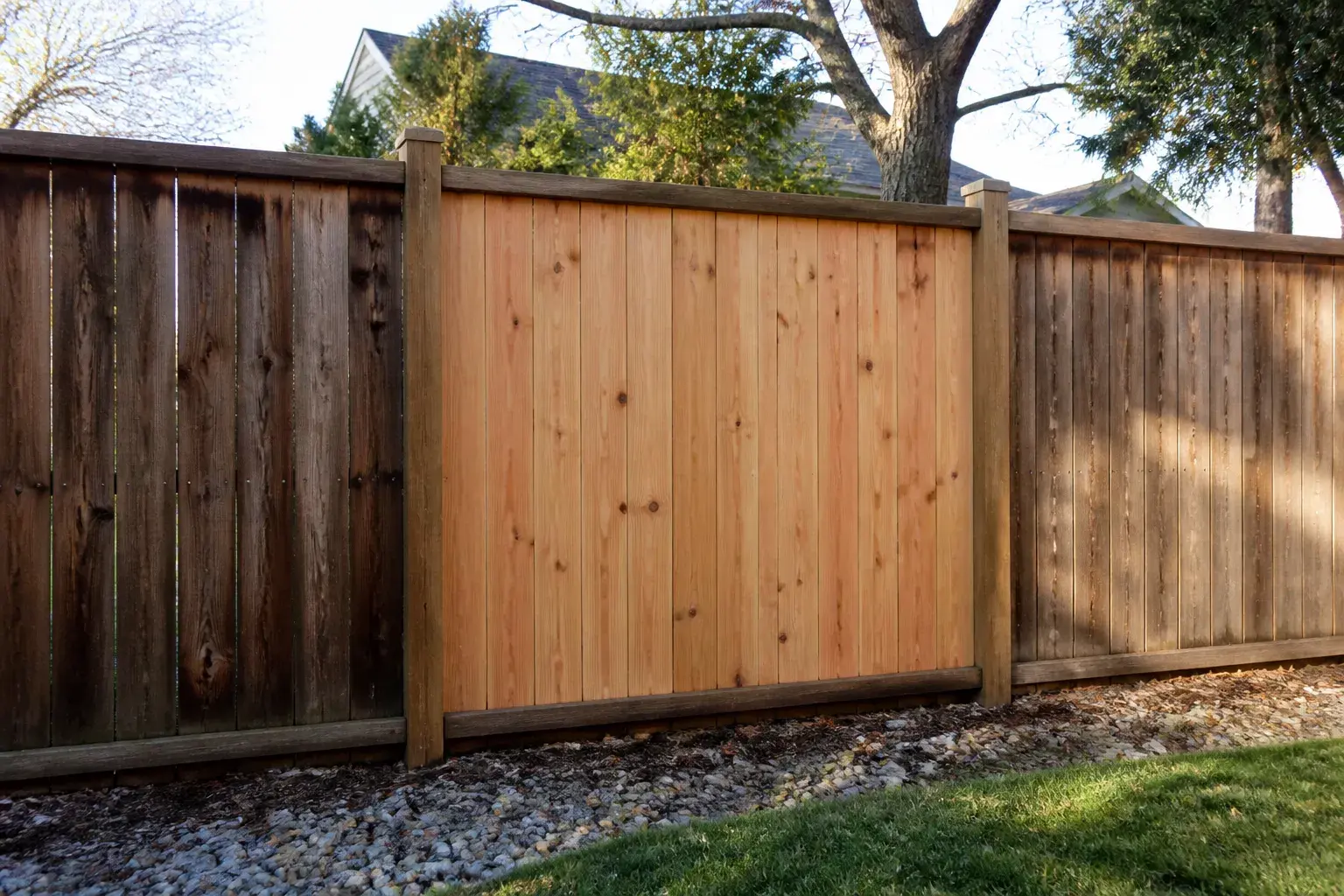
Fencing in Boise, ID
Fence Repair in Boise, ID
Damaged or leaning fencing can leave your yard exposed and looking unfinished.
If your fence has started to sag, split, rattle, or pull away from its posts, the problem usually gets harder to ignore with time. A small break can spread into a larger section, and a gate that only sticks a little today can become difficult to use tomorrow. When a fence stops doing its job, it affects privacy, curb appeal, and the simple feeling of having your yard properly enclosed.
Ridgeback Fence Co handles fence repair for homeowners in Boise who want the issue fixed without turning the whole fence into a full replacement project. We look at what failed, what can be restored, and what needs to be rebuilt so the repair makes sense for the condition of the fence. The goal is straightforward: get the fence stable, usable, and matched to the rest of the property as closely as possible.
Warning signs
A fence does not usually fail all at once. Most problems start small and show up in ways that are easy to overlook until they become obvious.
- Leaning sections: A section that tilts even slightly may have a loosened post, weakened footing, or damaged panel connection.
- Loose boards: Boards that shift in the wind or pull free from fasteners can expose the rest of the fence to more wear.
- Gate trouble: A gate that drags, latches poorly, or hangs unevenly often points to a post issue or hardware problem.
- Split or warped material: Cracks, twisting, and swelling can make the fence look uneven and reduce its strength.
- Visible gaps: Gaps between boards or at the base of the fence can affect privacy and let the problem spread.
When these signs show up, it is worth having the fence looked at before the damage travels into more of the line.
Common causes
Fence damage comes from more than one source, and the repair approach depends on what actually failed.
Loose fasteners
Screws, nails, and connectors can work themselves free over time. When that happens, sections wobble and start putting stress on the surrounding parts.Post movement
A post that shifts out of alignment can throw off the entire run of the fence. Once that happens, nearby panels and gates often start showing the strain.Board damage
Individual boards can crack, split, or break from impact and wear. Replacing only the damaged pieces can restore the fence without disturbing the rest.Hardware wear
Hinges, latches, brackets, and supports can loosen or bend. When hardware fails, gates and sections stop operating the way they should.General aging
Over time, repeated exposure and normal use can weaken connections and leave the fence looking tired even if most of it is still usable.
Ridgeback Fence Co evaluates the visible damage and the underlying cause so the repair addresses more than the symptom.
Repair options
Different problems call for different fixes, and a careful repair can save more of the existing fence.
- Board replacement: Damaged boards can often be removed and replaced so the section looks consistent again.
- Section straightening: Leaning areas may be reset or reinforced so the fence stands properly instead of drifting farther out of line.
- Gate adjustment: A gate can be realigned, rehung, or tightened so it opens and closes more smoothly.
- Hardware replacement: Worn hinges, latches, brackets, and supports can be swapped out to restore function.
- Post and support repair: If a structural piece has loosened or weakened, the repair can focus on restoring the foundation of that section.
The right solution is usually the one that solves the problem cleanly while preserving the usable parts of the fence.
How we repair
A good repair should feel organized and practical. Homeowners usually want to know what happens and what the end result will look like.
Step 1: Look over the damage
We start by checking the visible issue and the surrounding area. A broken board might be the obvious problem, but the real cause could be a shifted post or loose support.
Step 2: Plan the fix
Once we understand what failed, we decide whether the fence needs a small correction, a section repair, or a more involved rebuild of the affected area. That keeps the work focused and avoids unnecessary changes.
Step 3: Restore the section
We make the repair with attention to fit, alignment, and stability. The goal is for the repaired portion to work properly and blend in as naturally as possible with the rest of the fence.
Step 4: Check the result
Before wrapping up, we make sure the repaired area is secure, level where it should be, and usable for daily access.
This process helps homeowners get a fence repair that feels deliberate instead of patched together.
What to expect
Fence repair is often more manageable when you know what to prepare for before work begins.
- Clear access: Move items away from the fence line so the damaged area is easy to reach.
- Point out concerns: If the fence has more than one issue, show every area that seems loose, bent, or unstable.
- Match matters: If only part of the fence is replaced, we aim to keep the repair visually consistent with the surrounding sections.
- Function counts: A repair should do more than look better. It should restore the way the fence opens, closes, and holds its shape.
For homeowners in Boise, this is especially useful when the fence still has good structure in some areas and only needs attention where the damage started.
When repair makes sense
Not every damaged fence needs to be replaced from end to end. In many cases, a focused repair is the smarter move.
- A few boards are broken: Replacing a small number of damaged boards can solve the issue quickly.
- One gate is off: If the rest of the fence is sound, gate repair can restore daily use without larger work.
- A section has shifted: A single leaning section may be corrected without disturbing the full run.
- Most materials are still solid: When the core structure remains usable, repair often preserves more of the existing fence.
That said, a repair only works well when the surrounding material can support it. If a section is too far gone, the best path may be to rebuild just that part instead of repeatedly patching the same failure.
Material concerns
Fence repair is not one-size-fits-all. Different materials show damage in different ways, and the fix has to match the fence you already have.
Wood fences
Wood can crack, split, warp, or loosen at the fasteners. Repairs often focus on replacing damaged boards, tightening connections, and restoring alignment where the fence has shifted.
Gate assemblies
Gates take more regular use than most fence sections, so they often show wear first. A gate repair may involve hardware, alignment, or support adjustments to get it swinging properly again.
Structural sections
When a post or support area has failed, the repair needs to stabilize the section before it can hold up the rest of the fence. That part matters just as much as the visible fix.
Ridgeback Fence Co approaches each repair with the material, layout, and condition of the fence in mind.
Common questions
How do I know if my fence needs repair or replacement?
Look at how much of the fence is still sound. If the damage is concentrated in one area and the rest of the fence remains stable, repair is often the better path.
Can one damaged section be fixed without changing the whole fence?
Yes, many fences can be repaired section by section. If the surrounding material is in good shape, a focused repair can solve the problem without replacing the entire line.
What if the gate is the only problem?
A gate can often be repaired on its own. That may include adjusting the hinges, improving alignment, or replacing worn hardware so it closes properly again.
Why does a fence start leaning?
A lean usually points to a support problem. The post may have shifted, the base may have weakened, or the connections may have loosened over time.
Will a repair help the fence look better too?
Often, yes. A repair can restore the shape of the fence, reduce visible gaps, and replace damaged pieces so the line looks more complete.
How soon should I deal with loose boards?
Loose boards are worth addressing early because they can lead to more broken material, more movement in the section, and more strain on nearby parts.
Get the fence working again
If your fence is starting to lean, break apart, or stop functioning the way it should, Ridgeback Fence Co can help restore the problem area and keep the rest of the fence intact when possible. Fence repair works best when the damage is handled before it spreads, and the right fix starts with understanding what failed in the first place.
For homeowners in Boise who want practical fence repair that focuses on the actual issue, we’re ready to take a look and get the section back in shape.
How We Work
A Clear Fence Process From Start to Finish
Every project starts with a look at the property and a conversation about what you need the fence to do.
- 01
Review the Property
We look at the layout, access, and fence goals before planning the work.
- 02
Explain Your Options
You get clear guidance on materials and the type of fence that fits your property.
- 03
Build and Finish
We complete the project carefully and leave the site ready for use.
FAQ
Common Fencing Questions
If you have questions about your fence project, send us a message and we will help you think through the options.
How do I choose the right fence for my property?
It depends on your goals for privacy, security, and appearance. We help you compare the options and pick what fits best.
Can you repair part of an existing fence?
Yes, many fences can be repaired without replacing everything. We look at the condition of the fence and explain the best approach.
What types of fencing do you install?
We handle common options like wood, vinyl, chain link, and ornamental fencing. The right choice depends on the property and the purpose of the fence.
How long does a fence project take?
It depends on the size of the project, materials, and site conditions. We review the scope with you before work begins.
Do you help with fence replacement?
Yes, we can remove failing fencing and install a new system that better fits your needs. We make the process as straightforward as possible.
Ready to Upgrade Your Fence
Tell us about your property, and we will help you plan the right fence repair, replacement, or new installation.